This technically is the 4,001st post. The Twitter feed is read far more than I expected, too.
I’ll update the layout to celebrate.

A running description of activity related to DragonFly BSD.
This technically is the 4,001st post. The Twitter feed is read far more than I expected, too.
I’ll update the layout to celebrate.
Matthew Dillon’s made changes again that require a full world and kernel rebuild, if you’re following the bleeding edge. There’s also discussion of the underlying principles of the token-based multiprocessor work he’s planning.
They may be low, but Sascha Wildner has documented them.
(I am making a joke that probably only makes sense to native English speakers. Sorry.)
The compiler pcc, while having both history and speed, doesn’t get the attention that clang/LLVM gets. There’s a NetBSD blog article about building NetBSD with pcc. (via) I recall it couldn’t be used for DragonFly because of TLS support; I don’t know if that’s still an issue. It’s been covered here before.
The June issue of BSD Magazine is out, and the theme is: Firewalls.
If you’re running DragonFly 2.7, you will need to do a full rebuild on your next update. Matthew Dillon has made some changes because of his lwkt_token work. Making parts of DragonFly subsystems multi-processor safe should be much easier now.
Jan Lentfer has committed ldns and drill to DragonFly, in (unlikely) chance that you managed to delete BIND from pkgsrc (installed by default on 2.7+) and somehow couldn’t replace it.
There’s an interesting article about mandoc and mdocml up on undeadly.org, talking about its history and usage in OpenBSD. It’s present in DragonFly, though it hasn’t been set to replace anything (i.e. groff), yet, that I know of. I do like the mdocml HTML output, and I’d like to see it here.
Joe Talbott wants to write DragonFly/BSD drivers for a whole slew of wireless devices. These are also all the adapters he doesn’t physically have. You can fix this by purchasing something off that page, which will ship right to him. A bwi(4) driver is next, for instance.
I found this reference list of targets for bmake very useful, especially because I can never remember them all. Unfortunately, the site where it’s located appears to be going away at the end of the month, but it should resurface on a new NetBSD wiki.
BSDTalk 190 has 20 minutes of conversation with Michael Lucas, one of my favorite authors, about his new book, “Network Flow Analysis“. He is also responsible for other BSD books.
The latest issue of the Open Source Business Resource is out, and it has a number of articles about growth and open source. It’s a mix of “how-to” and “how-we-did” articles.
www.dragonflybsd.org runs using ikiwiki, which I just updated to the latest version. Everything looks OK, but tell me if I’m wrong.
Yay, acronyms! GSoC student David Shao has an extensive page up describing the state of his work so far.
It’s a holiday weekend, at least in the United States, so I’m posting few things that take time to view.
Murray Stokely mentioned this in a comment, but it’s juicy enough to warrant a post: the BSD Conferences channel on YouTube has all 17 of the recent AsiaBSDCon 2010 presentations, plus a lot more from other conferences.
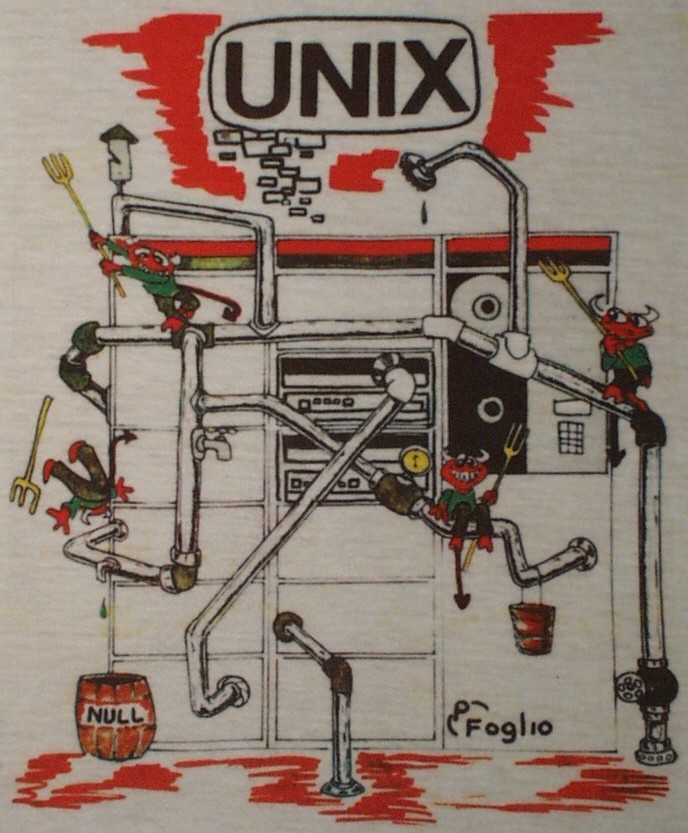
Phil Foglio, the fellow who drew the original BSD Daemon, has several comics strips, all of which are available for free – Buck Godot (complete), MythAdventures (in progress), What’s New with Phil and Dixie (in progress), and Girl Genius (in progress and in print).
I had a sudden buildup of things to link to. It’s three items, but there’s enough info here to eat a few hours…
Aggelos Economopoulos posted more details on his event tracing library, accompanied by a rash of commits. He’s interested in feedback.
Some recent bugs motivated Matthew Dillon to change DragonFly’s network stack. It’s a pretty radical simplification, so things like IPv6, ICMP, pf, etc. will need to be tested. There’s already a first round of changes to try out, served in Git.
Matthew Dillon’s been running swapcache on an Intel X-25 SSD on a very busy (in terms of disk) machine for some months now. Over a long period, the disk activity will wear down the SSD, but it’s important to see if swapcache makes a significant difference with extended use. Do you have to trade disk life for speedy I/O? He reports the results in a recent email.