
A DPorts explanation

The DragonFly site has a recently-updated page describing how DPorts is assembled and the process to contribute.

It does need the criterion for when it’s ready to release – either a number of working ports, or certain key ports buildable, or a combination of the two.  Something like “Chrome, Apache, nginx, MariaDB, Postgres, and X11 build, and over 75% of packages in general are successful, with less than a 10% decrease in buildable packages from the last dports release”.  I just made that up, so it’s not an actual threshold.  But it could be?
Some USB updates

libusb in DragonFly has had a few updates, mostly for compatibility with nut.  Nut, incidentally, replaces the APC tools for backup power management I’ve always used.

Oddly, searching for a nut manpage led me to a utility I haven’t seen before – nut(1), for nutritional analysis.

vi improvements

nvi2, which is what you get in DragonFly when you type “vi”, has been updated to version 2.2.2.  The nvi2 README gives a little history of how many years this has been around.  Close to 50?  A family tree would be interesting.

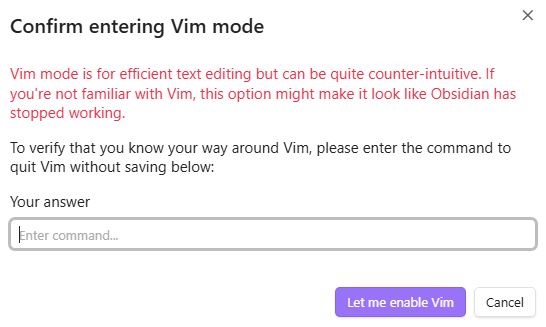
Related: turning on vim mode in Obsidian gets you this entertaining dialog:

Vi mode confirmation dialog, where you are asked to show you know how to quit out of it before you start it.

Shouldn’t it be “vi mode”?  Oh hey, look, an esoteric definition argument, just what you came to the Internet for.

IPv6 and proxying on DragonFly

ifconfig now has ‘proxy’ and ‘-proxy’ options.  The ‘proxy’ option is now on by default, so a given IPv6 interface will respond to neighbor solicitations when forwarding is on.  Use ‘-proxy’ to turn it off; the previous default.

(This was back in May, and I missed posting it before.)